MIAU MIAU: AI MUSIC
Although I knew that artificial intelligence was already creeping into every aspect of my life (and yours, too), it broke my heart when I saw and heard that it had brought Kurt Cobain back to life, meowing and singing “Come as You Are” from the unforgettable *Nevermind* in an Instagram reel, which was also reposted on TikTok. That’s when technology can really hurt. Yes, as a die-hard grunge fan, I’ll say it again: hurt.
Some time has passed since then, and now artificial intelligence has permeated everything, to the point where an unusual “Is this real, or is it AI?” is something we all find ourselves saying at least once a day. Again, it hurts. And it didn’t just hurt me.
It made headlines when Suno AI and Udio were sued by the record labels Warner Records, Sony Music, and Universal Music Group, all as part of a sort of pact against AI, because, well, it feels like a war. And well, these lawsuits and rulings haven’t ended yet, there have even been rulings in their favor in the battle currently being waged in Europe.
But let’s rewind briefly, with a Bic pen, rewinding the cassette tape, to give this post an analog vibe: What are Suno and Udio? In the words of ChatGPT, and well, this is a blog about AI, so why not use AI!, Suno and Udio are “artificial intelligence platforms that generate complete songs from text. You write a description (for example, “alternative rock ballad about summer, female vocals”) or paste in your own lyrics, and the AI produces a song with instruments, vocals, and a song structure.”
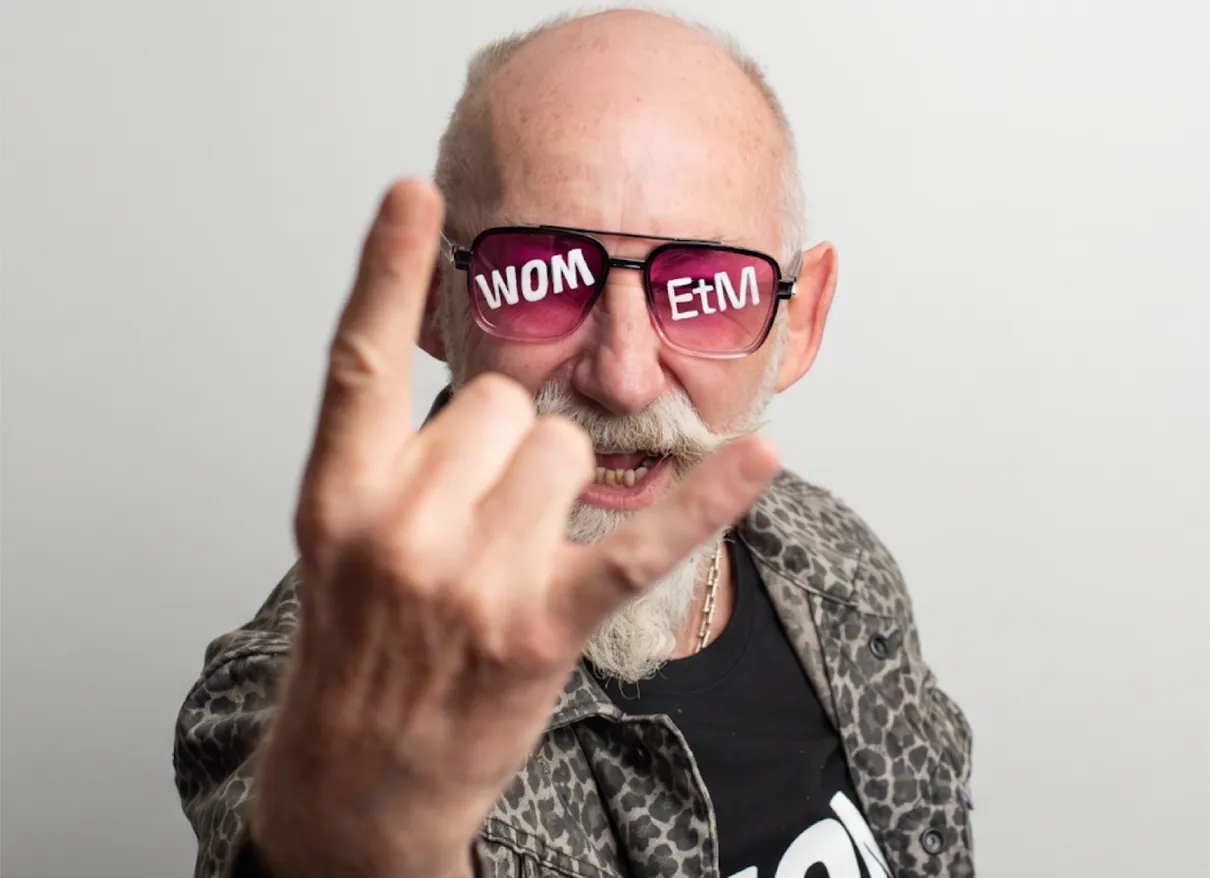
I was already familiar with Suno, because here at this agency, Roswell, we work with it, but mind you, we use it with great caution and respect. The creative department really shines when we have to put together a seasonal reel for Instagram, such as a cueca for our client Mercado Mayorista Lo Valledor, or a musical ode to the roaming service in over 100 countries offered by WOM Empresas, performed by Fred Durst’s double at a Lollapalooza Chile in a parallel reality. I have to say that this last one took me on a roller coaster of doubts: Is it okay to do this? Are we committing plagiarism? Would Fred like it? Would he even be proud of us? What would Kurt say? If, in the end, I was the one offended by the AI for infringing on Nirvana’s legacy, the question is entirely valid, and if I’m a purist about anything, it’s music and creativity in general.
Rewind again: let’s go back to the platforms that create music with AI.
Suno and Udio are the most popular, the first names that come to mind when we talk about music generation through artificial intelligence. However, there’s a whole range of options, and much more, in the Lord’s village (or vineyard?): ElevenLabs Music, AIVA, Stable Audio, SOUNDRAW, Beatoven (the spell-checker just corrected this to “Beethoven”), Mubert, Moises, LANDR. Of this list of other AI-powered music-generation platforms, I’m only familiar with ElevenLabs, because we also use it at Roswell, with caution and respect.
If I really put my mind to it, I could try to replicate a table that ChatGPT put together with the main features of each one, and given my lack of knowledge about these things, I put myself in your shoes and think I’d like to know a little more about this list that seems crazy, there are several of us who only thought ChatGPT, Gemini, and maybe something called Claude existed. Here’s how things stand these days:
- Suno: It can create an entire song, complete with vocals and lyrics, based on a specific genre. And it even produces it. Wow.
- Udio: Like Suno, but it allows for much more human input.
- ElevenLabs: It generates music based on a description, which I assume is a prompt. Personally, this sounds a lot like Suno to me, so if you have time, you can check out this video, I didn’t watch the whole thing, but it explains the difference between the two platforms.
- AIVA: composes musical pieces, but here the focus is more cinematic. Think movie soundtracks, video game soundtracks, and background music.
- Stable Audio: Focuses on audio creation and control. Interesting.
- SOUNDRAW: From what I’ve read, the target audience here is content creators. If you’re a content creator, this platform is for you.
- Beatoven: This one sounds really interesting. Beatoven’s focus is on creating music tailored to audiovisual content as “background music.” Imagine what you could do with a horror short film or TikTok. Booh!
- Mubert: Also interesting, since Mubert creates royalty-free music, and the musicians who contribute material get a cut of the profits every time their pieces are used to generate music. Way to go, Mubert.
- Moises: Just as Moses from the Bible parted the waters, this Moises separates the audio tracks of a song. For musicians, think of it as stems.
- LANDR: It doesn’t generate music; it does something I consider even more valuable. LANDR functions as an AI-powered production studio, with an AI producer that handles mixing, mastering, and even distributing the music.
With that list, we’ll wrap up our overview of the AI-powered music generation platforms available on the market, at least the most popular ones. Now, let’s dive a little deeper.
The modus operandi of artificial intelligence is quite simple; these are systems trained on massive amounts of data (text, images, audio, video, code, etc.) to generate highly adaptive learning models capable of emulating, reproducing, and “creating”, emphasis on the quotation marks, ranging from an answer to “How much of a Libra am I if my Moon is in Scorpio?” to generating a song “meowed” by Kurt Cobain. Part of all that available information is audio, and in the case of these platforms, that’s the foundation they use to deliver a result or product to the user. Every song you’ve listened to on Spotify, YouTube, or Rock & Pop radio has been processed by Suno, ElevenLabs, or one of the other AI platforms yet to come.
Okay. Enough about artificial intelligence, platforms, models, and data. Let’s talk about us, humans.
As with almost everything, this comes with a protest, and its name is “Is This What We Want?”, the silent album, as they call it. You can listen to it here or on your favorite streaming platform. You can also buy it on vinyl here.
“Is This What We Want?” was released on February 25, 2025, by “1000 UK Artists,” in reference to all the artists in the United Kingdom who oppose the UK’s proposed changes to copyright law. While the full list of those 1,000 artists can be found on the album’s website, some of the headliners include Damon Albarn, Kate Bush, Annie Lennox, The Clash, Jamiroquai, Tori Amos, Hans Zimmer (The Lion King, Interstellar…), and Sir Paul McCartney. The industry’s heavyweights had to band together because the proposed changes to the law, which were made public in 2024, would have allowed artificial intelligence companies to develop their products using others’ copyrighted works, music, artwork, texts, and more, without needing to obtain a license. We had to say no, and we had to shout it from the rooftops with an album of pure silence, the one I’m listening to right now, which sounds more like an experimental ambient/sound installation album. Because yes, it’s “The Silent Album,” but you can hear some sounds in the background.
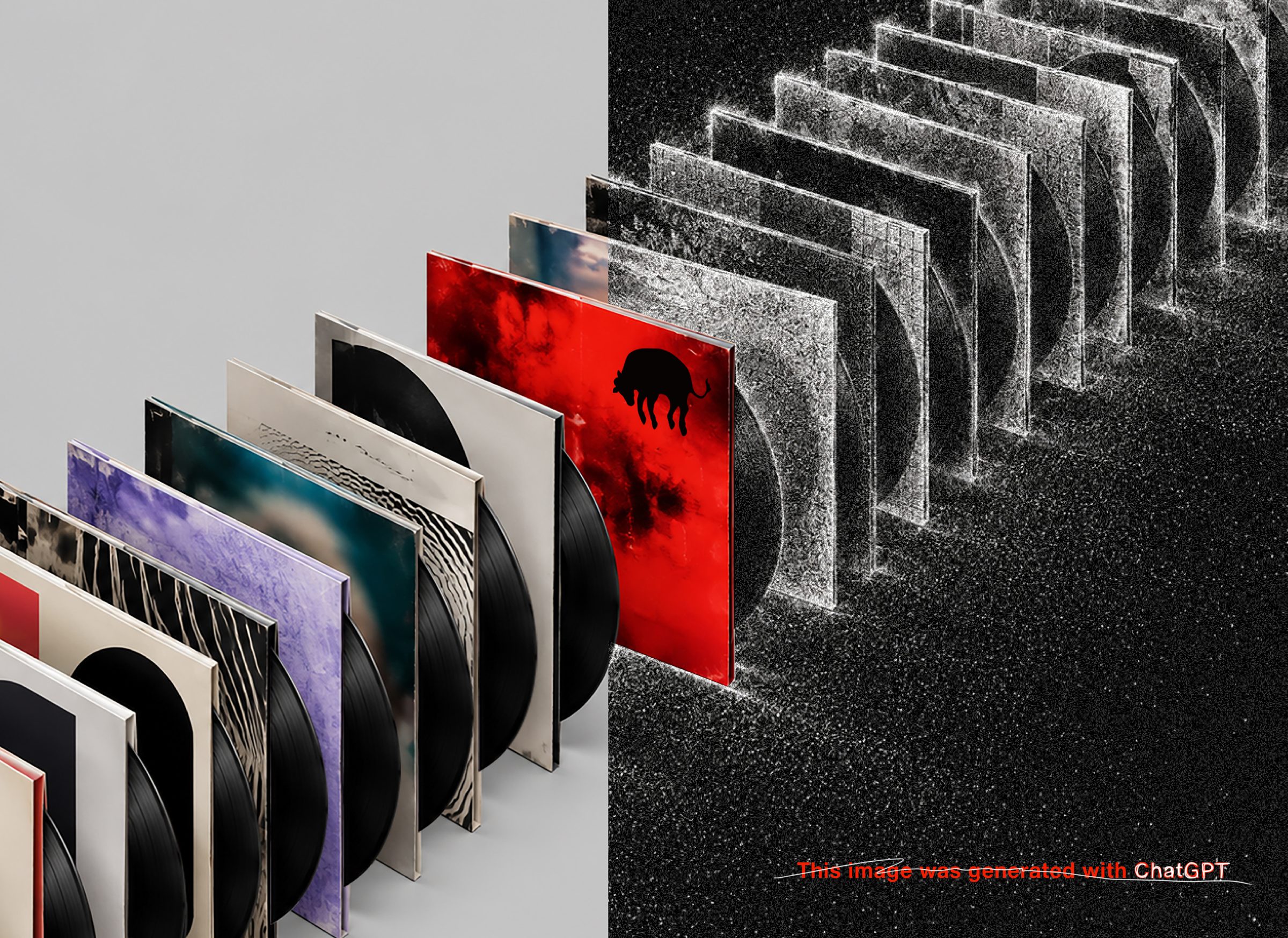
If I didn’t work at an advertising agency, I’d wallow in my purism and be out on the streets right now protesting or recording my own silent album, but reality is different. In a creative agency, investing in these kinds of tools, when used responsibly, can yield excellent results; I’ve seen them in our day-to-day work, and I’ve shared two good examples above featuring AI-generated work from the outstanding creative department at Roswell Agency. The tools exist, why not use them?... Because it’s AI? Because it undermines creativity? Because it isn’t real?
The problem with AI-generated music, for me, is none of the reasons mentioned above. The friction I feel toward artificial intelligence, sparked by Cobain’s “meows”, has to do with something deeper: when a machine is responsible for creating, humans can end up becoming complacent, because the act of creating ceases to be their responsibility and becomes something they can delegate almost entirely.
One of the things that defines us as living beings in this universe is our capacity to create, and if that is lost, we are all lost. John Dewey put it perfectly: “All art communicates because art expresses.” And once again, we are the only living beings, at least on this planet, capable of expressing ourselves. Art is expression, one of the most inherently human manifestations, and music, in all its forms, is the one that sounds best.
Taking a break from writing this blog, because I have to admit I got stressed out when I read that I had to write at least 1,000 words so Google wouldn’t exclude it from its index due to poor SEO, I hopped on Instagram, everyone’s go-to break. My well-trained algorithm showed me a post from KEXP, a fantastic Seattle radio station with great live sessions on YouTube; here’s a favorite. The post I’m referring to is in carousel format, with several images evoking music in many ways, featuring an overlay that reads: “AI could never replace this.” I agree, but I’d also venture to say that in an advertising agency with talented creative professionals, AI is here to enhance the work of the entire team, and, consequently, the work of all its clients. Of course, let’s not forget to remain human, to keep playing, to stay accountable for our ideas, and to be passionate about what those ideas can become, with or without AI.
This article was created with ChatGPT Final Turbo Eternity Version.
Nah, just kidding.